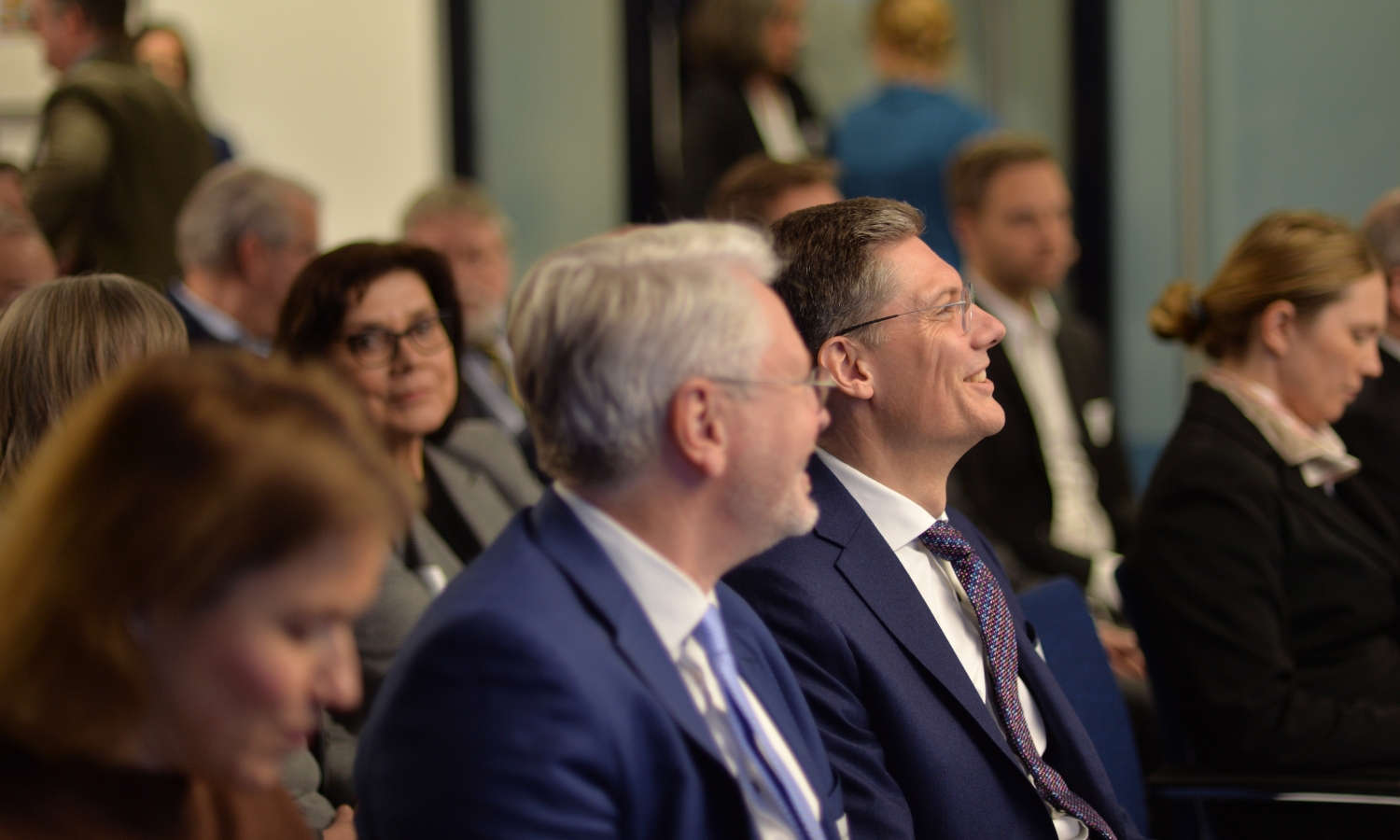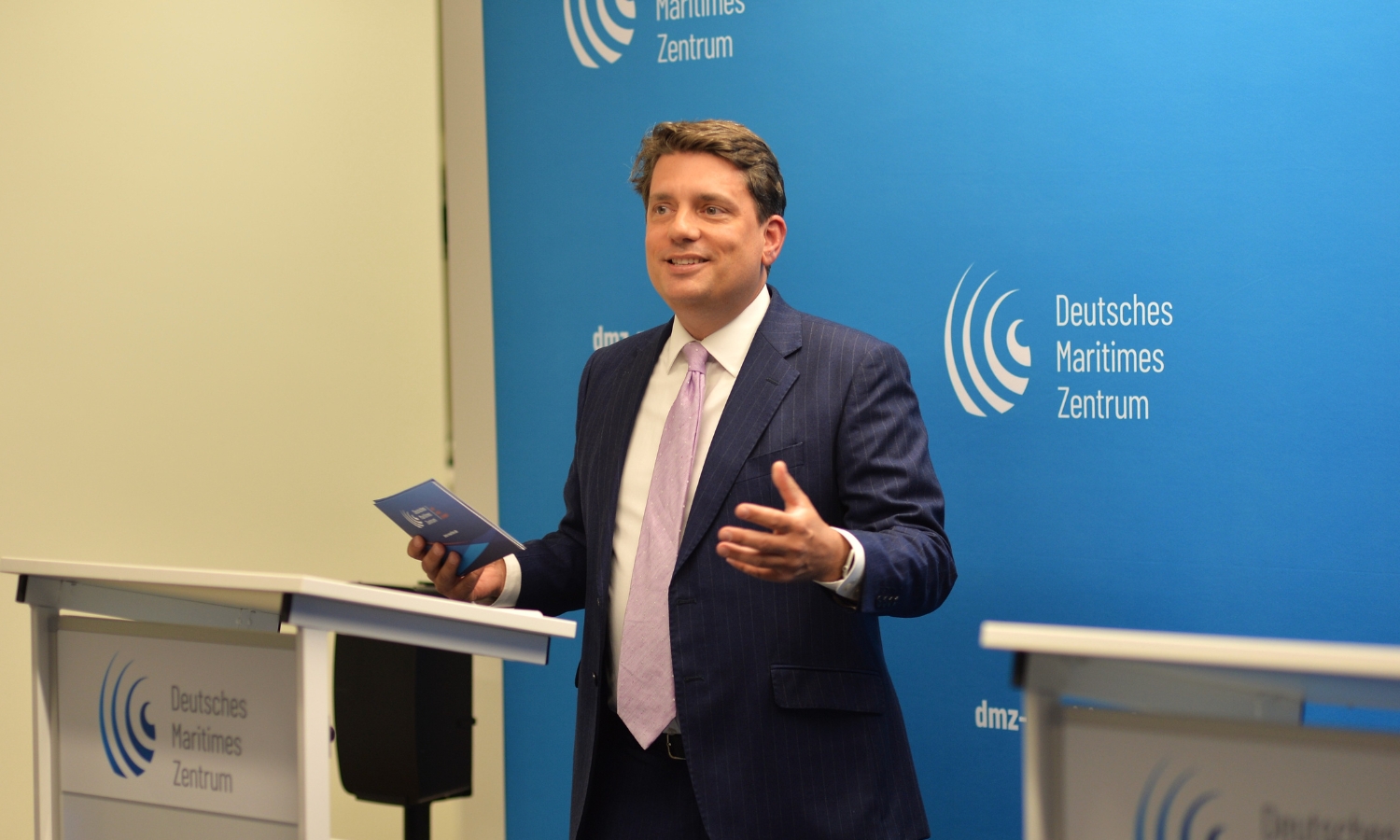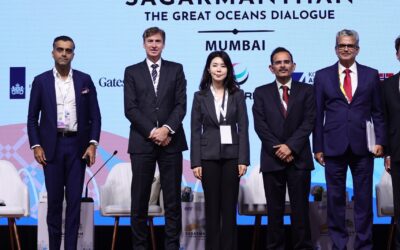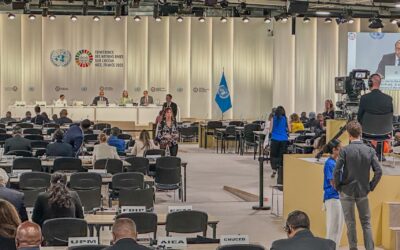
After six years on the Blohm + Voss shipyard site in Hamburg-Steinwerder, the German Maritime Centre relocated in July 2025 to Hamburg’s city centre. The opening event was hosted by Dr Matthias Catón, Managing Director of the German Maritime Centre. In his welcoming remarks, he emphasised the importance of the new location: “With our new premises, we can now be a place for exchange not only in a figurative sense, but also in a very real one.” This was the largest event held at the new location to date, he added, but by no means the last.
Perspectives from Politics and Public Administration
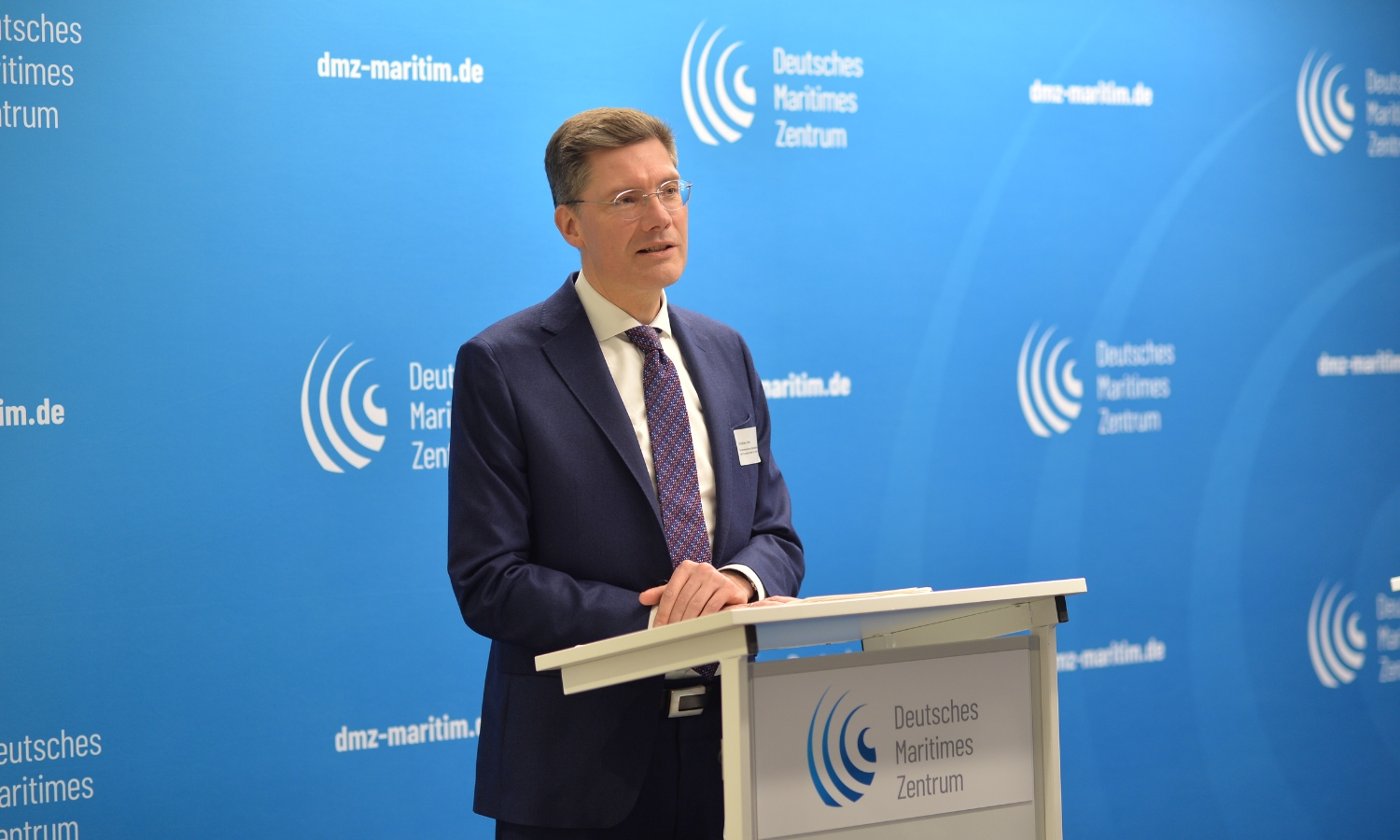
Catóns opening was followed by a welcoming address from Christian Hirte MP, Parliamentary State Secretary at the Federal Ministry of Transport. He underlined the need for action in the maritime sector and in transport policy as a whole in light of current security-related challenges. In addition, he emphasised the significance to keep pace in other future-oriented areas, such as climate protection and technological transformation. “Germany and Europe must keep up, help shape developments and act at the forefront of technical progress,” Hirte stated.
In his welcoming address, Dr Christopher Schwieger, State Councillor at the Ministry for Economic Affairs, Labour and Innovation of the Free and Hanseatic City of Hamburg, highlighted the function of the German Maritime Centre as an important stakeholder in the maritime sector: “In times of profound transformation, from digitalisation and new propulsion technologies to the maritime energy transition, the role of the German Maritime Centre as a platform for strategic exchange is more important than ever.”
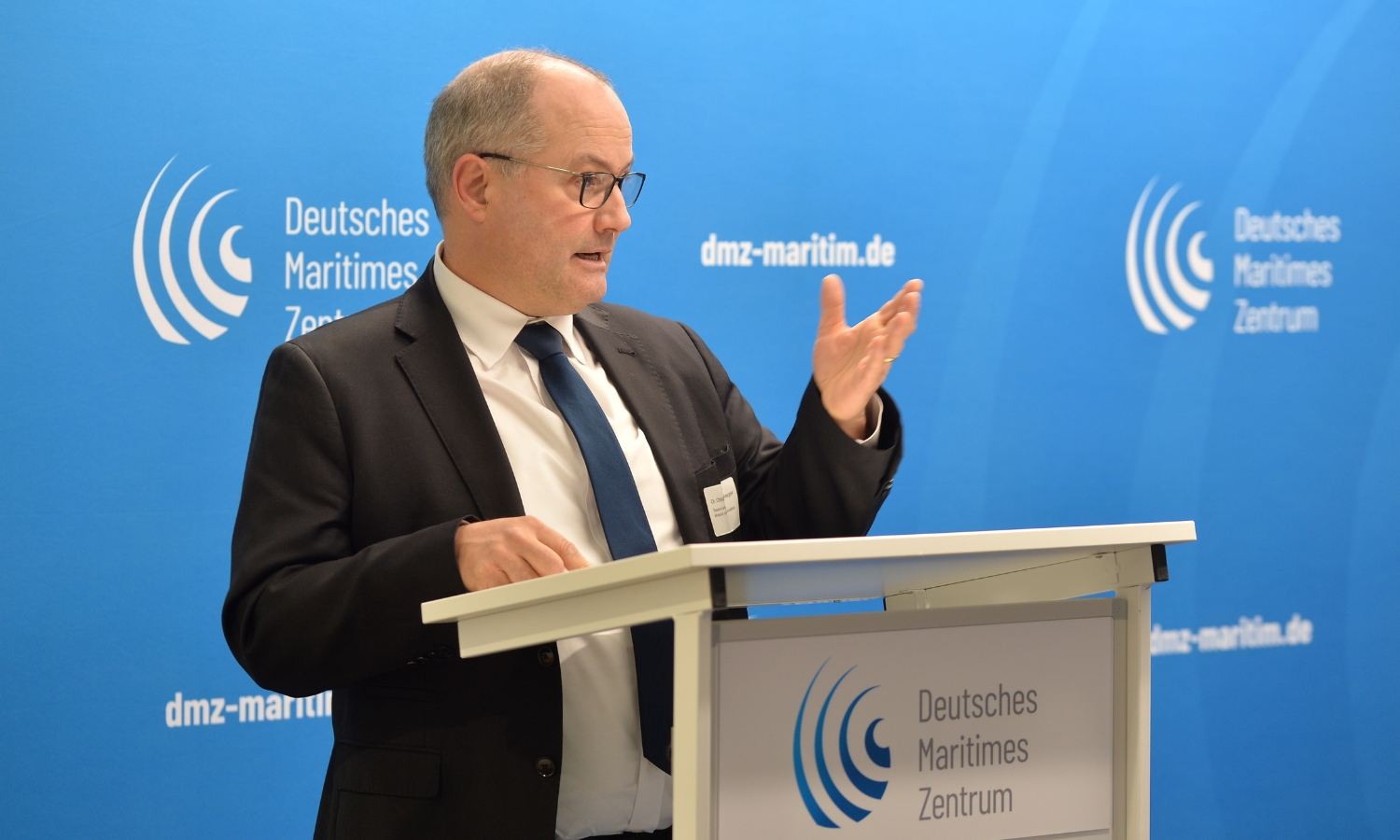
Dr Reinhard Lüken, Chairman of the DMZ, provided a retrospective and outlook on the institution’s development. Under the title “The DMZ 2017-2026”, he traced the key milestones of the organisation, from its founding through to the move to Hamburg city centre and the work of a steadily growing team. Lüken outlined clear perspectives for the upcoming years: “Current geopolitical developments have enormous maritime dimensions. Rarely has this been as evident as it is today. How do we deal with this? What conclusions must we draw? It must be our ambition to make meaningful contributions in this area in the future.”
His overview made particularly clear that the institution has continued to evolve organisationally as well as in terms of its substantive focus, in line with ongoing developments in the maritime sector.
Key Topic: Global Challenges for Maritime Supply Chains
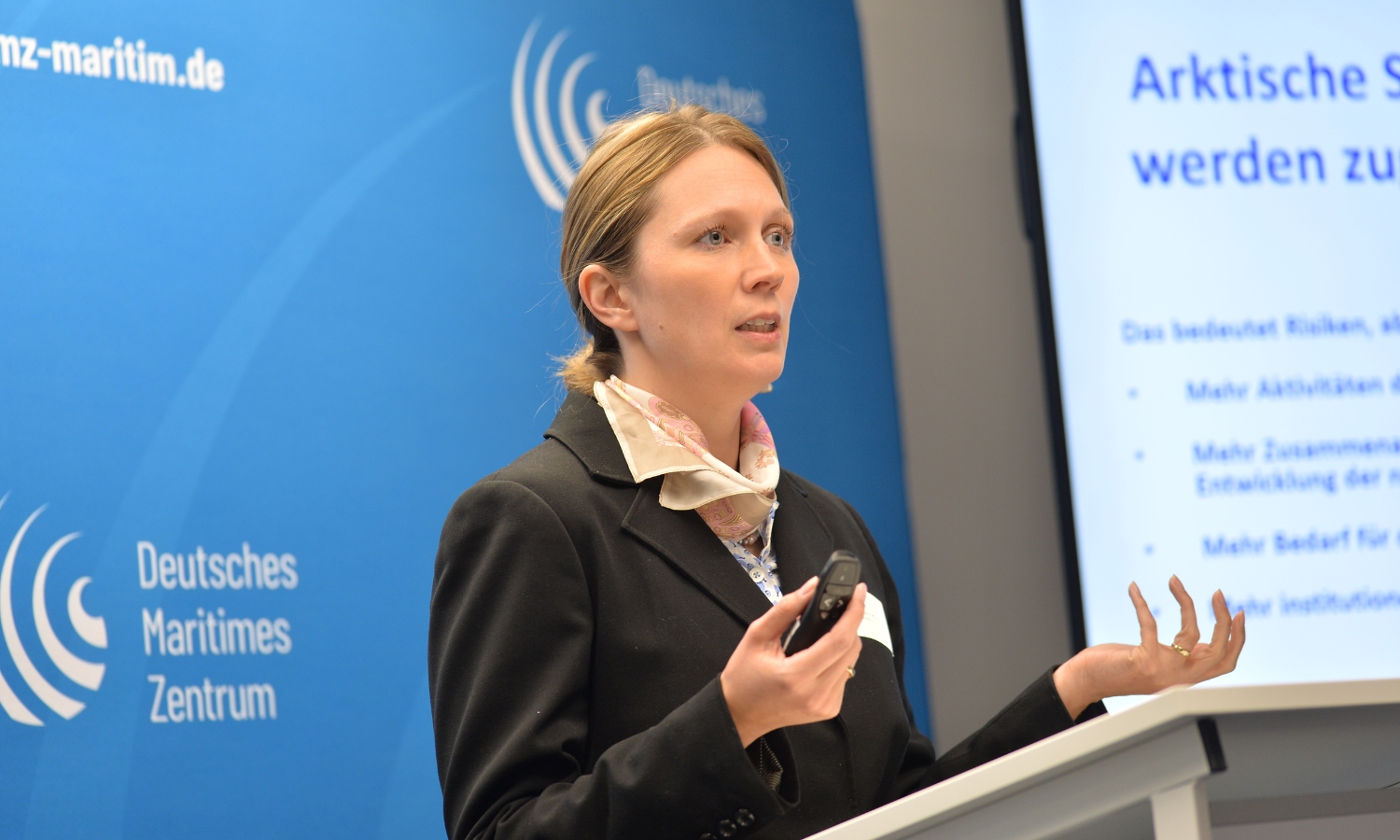
The key topic of the evening was the keynote address by Dr Kira Vinke, Deputy Research Director and Head of Center for Climate and Foreign Policy, DGAP. As an expert on the security implications of climate change and global risk dynamics, she combines academic analysis with foreign and security policy practice.
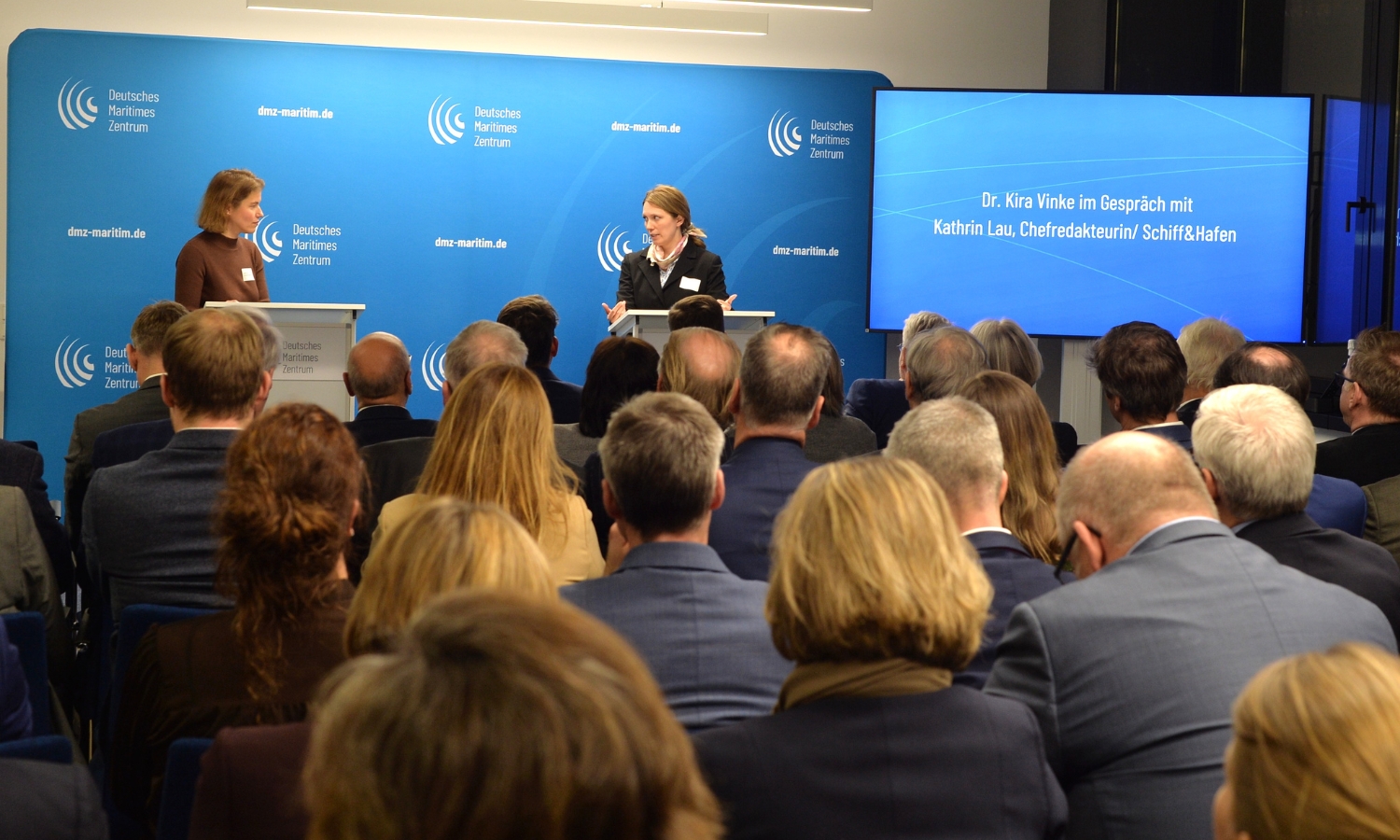
In her keynote entitled “Vulnerable Sea Lanes: How Geopolitical and Climate-Related Crises Are Reshaping Global Maritime Supply Chains”, she compellingly highlighted the interconnections between security conflicts and climate-related risks to the Earth system. Using various examples, including current tensions surrounding Greenland, she illustrated how geopolitical interests are increasingly intersecting with severe ecological and climatic risks, such as the ongoing melting of the Greenland ice sheet. She emphasised that the security of maritime transport routes is no longer merely an economic issue, but a central geopolitical and climate policy challenge.
These aspects were explored in greater depth in a discussion with Kathrin Lau, Editor-in-Chief of Schiff & Hafen and Ship & Offshore, and supplemented by perspectives from maritime practice. In closing, Dr Vinke summed up with a well-known aphorism: “We cannot determine where the wind comes from, but we do have an influence on how we set our sails.”
Conclusion: Dialogue and Networking
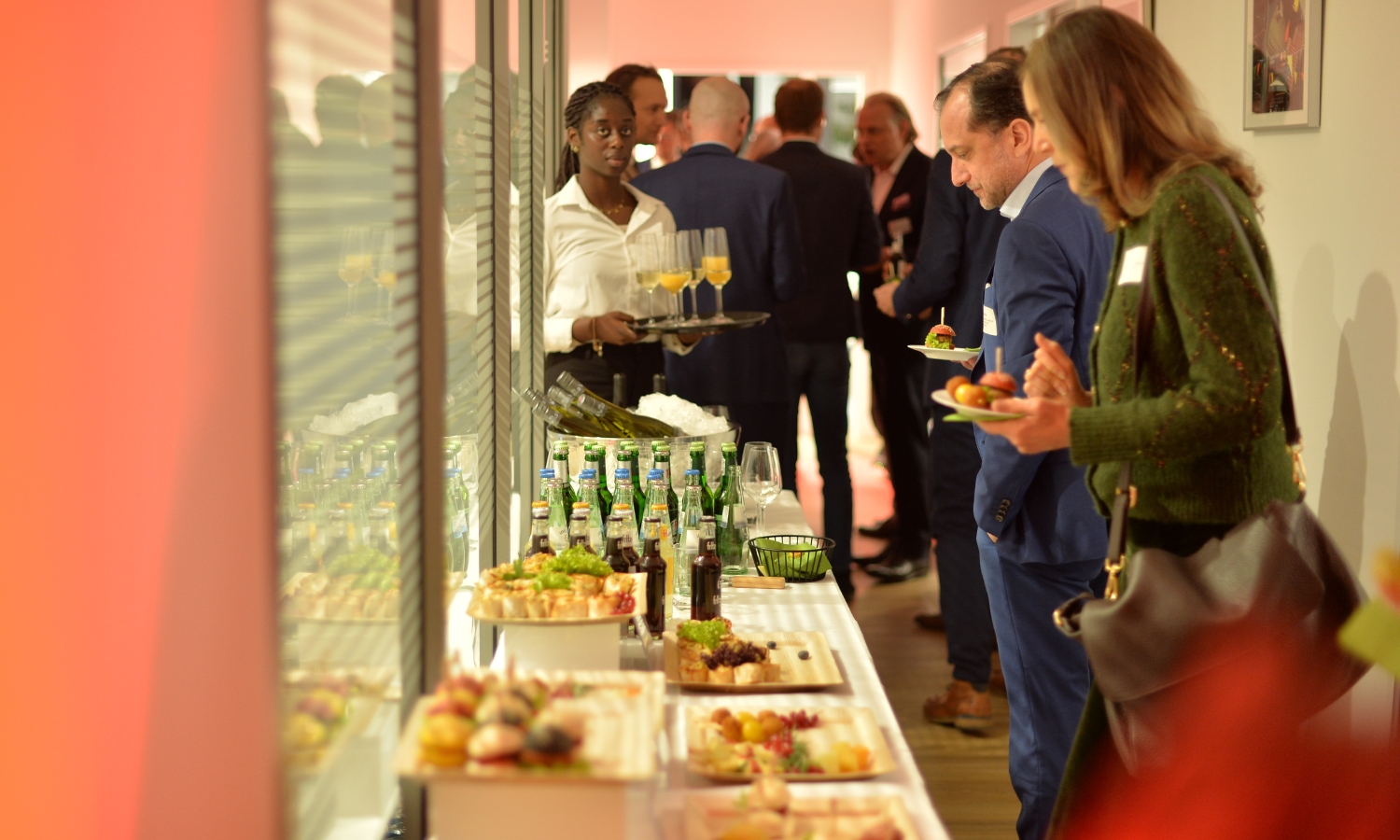
At the reception following the official programme, guests took the opportunity for personal conversations and professional exchange.
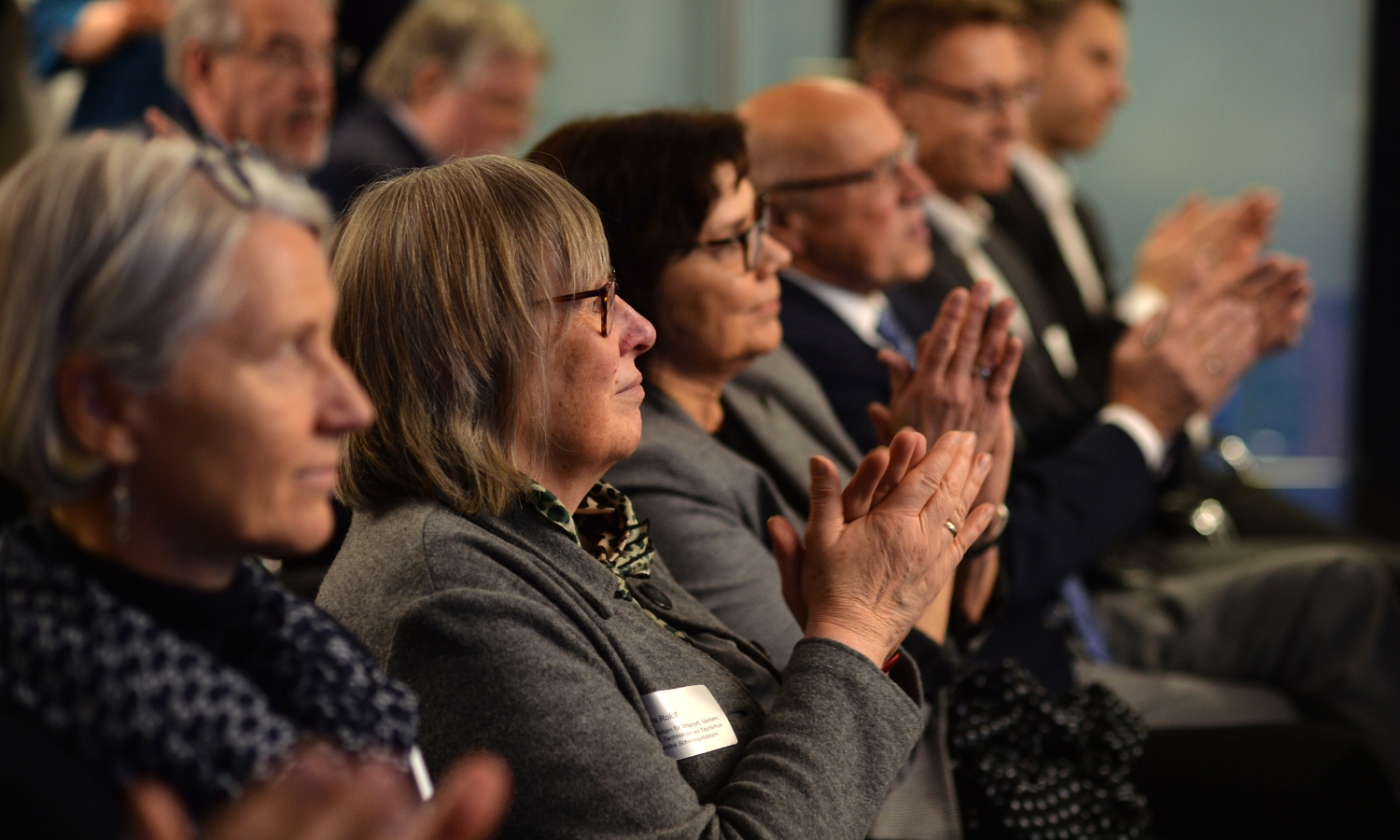
The opening event provided an overview of the current and future fields of activity of the German Maritime Centre. At the same time, the event underscored the importance of dialogue and adaptability against the backdrop of a constantly evolving maritime sector, as well as ongoing geopolitical and economic challenges.
Further Impessions