
Mr Martin, what does your work as a project manager for short sea shipping at the German Maritime Centre involve?
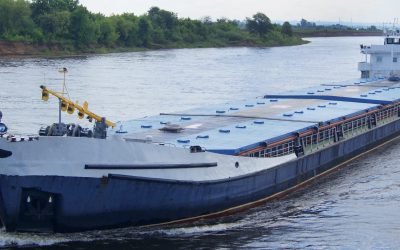
The key aim of the “Promotion of Short Sea Shipping” project is the development of a strategy to shift freight transport from road to water. My work focuses on regional waterways, for which I develop proposals for efficient logistics processes.
The project is set to last three years and is only just getting started, so there is much work to be done.
Why is shifting freight from roads to water particularly relevant right now?
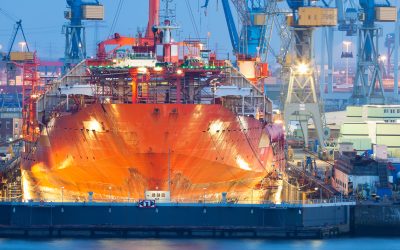
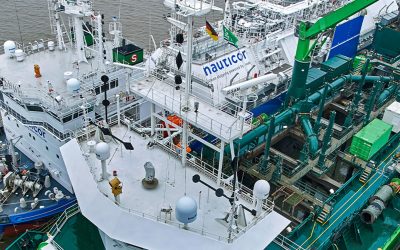
In fact, this has been a topical issue since the late 1990s, based on an EU initiative. There have been efforts to transfer more road freight traffic onto waterways for a long time, primarily because waterborne transport, together with rail, is a much more sustainable mode of transport. Moving freight by water saves large amounts of CO₂ and eases the burden on road infrastructure. In addition, a strong short sea shipping sector contributes to overall efficiency in transport logistics.
Do you have a maritime professionally?
Yes, I’d say so. But long before my maritime career began, I had early exposure to shipping. My grandfather ran a seamen’s mission in Emden in Northern Germany, and I spent a great deal of time there as a child. For many residents, the mission was a substitute for family, and I experienced first-hand what everyday life in that sort of place was like. I got to visit ships from time to time, spent time with people from the maritime world, and even played billiards with seafarers on occasion.
It was a fascinating time, and I got to know shipping from a very early stage through a social perspective. These formative experiences made shipping something of a guiding thread in my career.
But you never wanted to go to sea yourself?
To be honest, my time at the seamen’s mission made me realise that I didn’t want to go to sea. I saw how demanding the job is and how difficult it is to live what I would call a “normal life”. Being away from family for long periods, far from home – you have to actively decide for that daily life. For some, that’s precisely what makes it appealing, but I knew it wasn’t for me.
Nevertheless, that time sparked my interest in shipping and ensured that I have kept it as part of my professional life.
Which path did you take instead?
I first opted for a commercial background and a degree in business administration, after which I joined the Hamburg-based shipping company Rickmers. During several years in the industry, I witnessed many changes, including the fact that a number of companies were struggling, and that the sector as a whole was going through difficult phases.
Alongside my work, I completed a master’s programme in logistics management to broaden my expertise. I wanted to gain a more comprehensive understanding of logistics and to look beyond shipping alone. I believe that this wider perspective is helpful for the project here at the DMZ.
You’ve joined the German Maritime Centre only a while ago. How did you find your initial experience with your work and the team?
There was a lot of getting up to speed with the project content – much reading and gathering information. But I quickly got into the subject because shipping in general is not new to me. I can now complement my existing knowledge with new aspects. Also, the team is very friendly and really helped me settle in.
What are the specific objectives of the short sea shipping project?
The overarching goal of the project is to define what’s called a “short sea strategy” as part of the national port development plan. This means developing specific measures to strengthen short sea shipping. One of the challenges is to define targets that can reasonably be achieved. For example, I look at what percentage of traffic can realistically be shifted, and what the potential of inland waterways is in this process. Naturally, the targets have to be coordinated with various stakeholders. As I said, the project is still in its early stages, and I am curious to see what outcomes will emerge.
What draws you to this project personally?
I find it exciting to work at the intersection of science, politics, and economy. This brings in a completely new set of aspects for me, as I have so far mainly experienced shipping from a business perspective. I am interested in playing an advisory role for politics and administration, to help ensure good economic framework conditions overall. That is why I find it interesting to work on a strategy for short sea shipping and to engage with the many different decision-makers involved.
Is there a particular experience from your time at the German Maritime Centre so far that you tell others about?
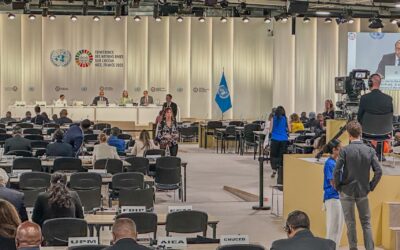
Right at the start of my time at DMZ, I attended the transport logistic fair in Munich, where the German Maritime Centre hosted a panel discussion. It was great to see that decision-makers from politics and business seemed to be pulling in the same direction and that there is a willingness to pursue joint initiatives. All that is needed are the right implementation measures. That’s why I believe we are doing significant work with this project.