
Henning Martin
Project Manager Short Sea Shipping
Phone: +49 40 9999 698 – 77
E-Mail: Martin[at]dmz-maritim.de
As part of a DMZ Delphi survey on wind turbine transports, experts from industry, logistics, ports, public administration, associations, and research were asked for their assessment of the current challenges and future requirements of onshore wind energy logistics. With this survey, the German Maritime Centre aims to systematically consolidate expert knowledge and derive practical insights for the future-oriented design of transport and logistics structures. The Delphi survey is a scientifically established method in which experts anonymously share their assessments over several rounds of questioning in order to progressively identify robust trends, priorities and target scenarios.
The findings present a clear picture: the necessary expansion of onshore wind energy is already taking place under difficult conditions and is significantly constrained by infrastructure shortcomings, administrative barriers, and a lack of planning reliability.
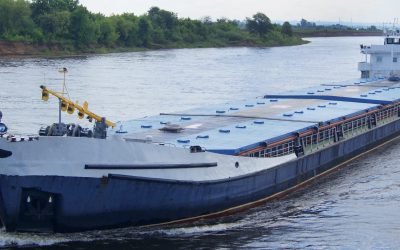
Road transport continues to dominate the distribution of wind energy components, while the share of inland waterways is currently estimated by the majority of respondents to be below 10%. Under the present conditions, inland waterway transport therefore primarily serves a redundancy function and helps to relieve road transport at peak times. At the same time, many participants see considerable potential for modal shift despite existing systemic obstacles. Under improved conditions, around 38% of respondents consider a shift of more than 15% to be realistic, while under ideal conditions nearly half of the participants estimate the potential to exceed 50%.
However, a mandatory shift of heavy and oversized transports to inland waterways is largely rejected. Instead, respondents call for targeted, incremental improvements. Key levers identified include efficient infrastructure, functioning heavy transport hubs, suitable storage and handling areas in ports, micro-corridors, and fast and reliable permitting procedures. In addition, digital support for route and permit planning, as well as improved visibility of intermodal transport options, play a crucial role.
The target vision determined from the survey results describes a dynamic, flexible, and sustainable logistics system characterised by low bureaucracy, high planning certainty, and intelligent interlinking of transport modes. The survey clearly indicates that efficient and future-proof wind energy logistics require close cooperation among all stakeholders and a coordinated interaction between infrastructure, public administration, and the market.