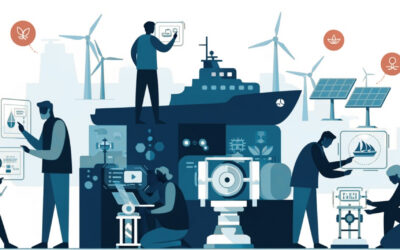
There is a need for new methods and technologies from the fields of mobile robotics, sensor technology, autonomous systems and drones. They could enable inspection, maintenance and exploration to be carried out independently, reliably, safely and cost-effectively. In addition to offshore wind energy, there is a potential demand in the areas of hydraulic steel structures, ports, oil and gas, shipbuilding and marine research. These applications are not limited to water surfaces, but can also be used underwater and in the air.
The technological development of mobile robotics, autonomous systems and drones requires intensive test and trial phases under environmental conditions approximating real ones. Only in this way can we ensure that the technical systems have reached a sufficient degree of maturity, such that they can be used in productive operation as standard, with low risk and at low cost. Tests and pilot projects under real-life environmental and usage conditions are particularly necessary for the transition to technology readiness levels 6 (prototype in simulated/simplified application environment) and 7 (prototype in real application).
For these tests and pilot projects, a centre for testing innovative marine technologies under offshore conditions could offer benefits and advantages for the entire maritime industry.