Short Sea Shipping is a key instrument on the path towards an efficient, climate-friendly and resilient German freight transport system. Considering ambitious climate targets and the steadily declining share of waterborne transport in the modal split over recent years, there is an urgent need for action. Both Short Sea Shipping and hinterland transport via inland waterways play a central role in achieving the EU climate targets by 2045. In addition, the EU Sustainable and Smart Mobility Strategy sets the objective of increasing the share of inland waterway transport in total EU freight transport volumes by 25 per cent by 2030 compared to 2015.
Within tis framework, the project “Strengthening of Short Sea Shipping” specifically addresses existing challenges and policy objectives. As a measure under the National Ports Strategy (Measure 2.34), the project focuses on the development of an implementation-oriented short sea shipping strategy. The emphasis lies on shifting freight transport from road to ship. The strategy is intended to identify specific measures for modal shift, thereby contributing to emissions reduction in the transport sector and to the sustainable alleviation of pressure on road infrastructure.
A key component of the project is the systematic integration of Short Sea Shipping with onward transport within Germany, in particular via inland waterways. Through this approach, waterborne transport is deliberately strengthened as an integral element of resilient and environmentally friendly supply chains and enabled to support a future-oriented freight transport system.
Overview

Objectives
The core objective of the project is the development of a short sea shipping strategy that links Short Sea Shipping with onward transport within Germany (hinterland transport) via inland waterway vessels. The focus is on shifting road freight transport to coastal and inland waterways.
Project Duration
The project was launched in January 2025 and is scheduled to run until December 2027. An extension of the project may be approved if required.

Funding
This project is funded directly by the Federal Ministry for Transport. In addition to annual financial support, the funding also includes assistance with networking between stakeholders from politics, industry and research, as well as access to data portals of the Federal Ministry for Transport.
Background and Context
The background to this project is rooted in key challenges and development trends within the field. These highlight the issues addressed by the project and the way in which it seeks to contribute to viable solutions.
Facts and Figures
The network of navigable waterways across across Germany extends over a total length of 7,280 kilometres and constitutes a significant component of the national supply chains.
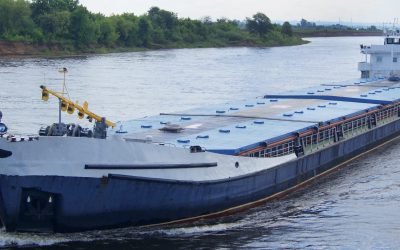
On average, a single inland waterway vessel replaces the use of around 150 heavy goods vehicles.
Of the total seaborne cargo throughput of 274 million tonnes handled at German ports in 2024, 159.6 million tonnes accounted for Short Sea Shipping. This corresponds to a share of just under 58 per cent.
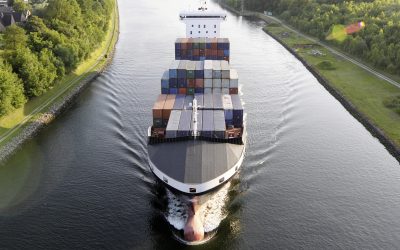
The length overall (LOA) of a Euro vessel (EMT Class IV) is 110 metres. Depending on the vessel configuration and stacking height, it can carry approximately 150 to 190 TEU.
Learn more about the project
Explore further articles, events and related content.

Results: DMZ Delphi Survey on Wind Turbine Transports
As part of a DMZ Delphi survey on wind turbine transports, experts from industry, public administration, ports, and research were consulted on current challenges and potential solutions in the field of onshore wind energy logistics. The results are summarised here.

Opening Event of the DMZ “Short Sea” Series: Focus on Wind Energy
As part of the DMZ “Short Sea” event series, around 40 experts from industry, ports, public administration, and research met on 29 January 26 at the premises of the German Maritime Centre to exchange views on onshore wind turbine logistics.
Contact
Do you have any questions or suggestions regarding the project? Get in touch with us:

Henning Martin
Project Manager Short Sea Shipping
Telefon: +49 40 9999 698 – 77
E-Mail: Martin[at]dmz-maritim.de