


Mr Puckelwald, what does your work as advisor for ports and infrastructure involve?
Above all, I maintain a continuous overview of ports and their hinterland connections. I keep an eye on current issues and actively engage with key stakeholders. Of course, my work then involves initiating and implementing relevant projects related to port topics.
What kind of projects are these, for example?
We have just completed a project on federal funding programmes. Specifically, we carried out an impact analysis of IHATEC II and DigiTest, two government programmes designed to strengthen innovation at German ports. We examined how successful the programmes actually are and conducted an online survey within the maritime sector. The survey results suggest that IHATEC II and DigiTest have a good success rate. Insights like these are close to practice and provide a solid information base for decision-makers.
Part of your work is keeping a very broad overview. Do you have a personal “favourite” topic within your field of work?
Definitely. One topic I find particularly exciting is not a very specific port issue. It’s the analysis of employment structures in the maritime sector. I look at questions such as: how many people are employed in the maritime sector, and what kind of people are they? This is a project that has been running for two years and one that I’m genuinely committed to. This is also because labour market economics ties in closely with my previous professional background.
How long have you been working at the German Maritime Centre?
I started in 2021, during the pandemic. For half a year, I saw my colleagues almost exclusively on screen. It was great that this diverse team of people with very different backgrounds still managed to build connections and stay in close exchange. I got to know people not only professionally but also personally. There is a great deal of openness at the German Maritime Centre, and even though many new colleagues have since joined and others have left, we have managed to preserve that spirit quite well.
How would you describe your role within the team?
I think you can tell that I have been here for quite some time now and am familiar with many of the processes. It is worthwhile to reflect on how we do things now and how we used to do them. Other colleagues often ask me about this, and I am able to pass on my “knowledge” quite well, particularly because the team, as mentioned, continues to change and grow.
What was your career path before joining the German Maritime Centre?
I come from a traditional economics background. I studied economics and then worked at various research institutes and universities in Hamburg and Kiel. In Kiel, I worked at the Institute for Employment Research and later conducted research at Kiel University on regional labour markets – certainly a foundation for my current enthusiasm for labour market economics.
Later, I worked at the Hamburg World Economic Institute, where I was also able to further develop my substantive focus areas. In parallel, I dealt with macroeconomics and monetary policy. Finally, I was involved in a project on economic forecasts at the University of Hamburg.
After these various positions, what ultimately led you to the German Maritime Centre?
At some point, a purely academic research environment at universities and similar institutions was no longer sufficient for me. While I wanted to continue working on the topics that inspire me, I was looking for a stronger practical orientation. The focus of the German Maritime Centre is a very good fit in that respect.
What I particularly appreciate is the exchange with the various stakeholders. As the maritime sector is relatively small, we quickly connect with the truly relevant actors. This ensures that our work has a very practical point of application.
Which aspects of your research background do you use in your current work?
Above all, I draw on my background in quantitative methods – from statistics and regression analysis to the clear and accessible presentation of results. I definitely make use of my previous professional experience; the difference is that I now have a much narrower and, in my view, very exciting substantive focus.
You are our expert on quantitative data. What do you value about working with large datasets, and what are the challenges?
Difficulties sometimes arise even before the actual data collection, in the form of conceptual boundaries and definitions. The maritime sector itself, for example, is not clearly defined in conceptual terms. It encompasses many different areas, and one often encounters differing opinions and approaches. Finding the appropriate definitions for a given research question is certainly a major challenge.
Which other topics are currently particularly relevant in your field of work?
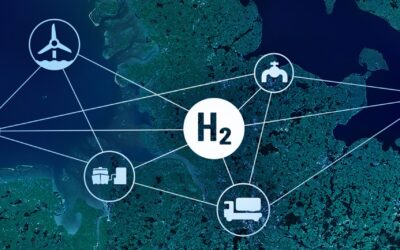
At the moment, alternative fuels and emissions in ports are especially topical. Ports, too, must address the question of how the transition from fossil fuels to more climate-friendly alternatives can be achieved, as well as the electrification of port operations. In addition, the competitiveness of German ports is always high on the agenda; how do we compare with European competitor ports, and how is cargo throughput developing? These are questions that currently occupy us.
What exactly is happening in the area of alternative fuels?
Ports are a central hub for alternative fuels, as this is where they arrive and are distributed. That is why they play a key role in the future of the sector. As part of my work, we are in dialogue with various stakeholders on this topic, and we are planning to address it more broadly, as we still perceive a great deal of uncertainty around alternative fuels within the sector. As a thinktank, we want to close knowledge gaps and provide guidance.
What change would you like to see in your field of work?
I would definitely like to see greater visibility for German Maritime Centre. I believe we do relevant work and offer valuable products. If more people were aware of this, it would certainly have a positive effect.