


Mr Ziehl, what are your responsibilities as a Communications Specialist at the German Maritime Centre?
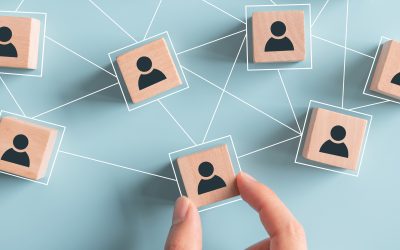
My primary responsibility is managing our central database for contacts, addresses and related information. In addition, I maintain our in-house library, where all relevant documents, articles and other important materials are collected. Together with colleagues, I am also responsible for our tools “The Maritime Map” and “The Maritime Pathfinder”, which need to be kept up to date continuously.
How does all of this data relate to communication?
Well-maintained databases are fundamental to our external communication. For example, we need clear and reliable contact details when inviting guests to an event. In other cases, a catalogue of articles and documents ensures we keep up to date about specific topics.
What exactly does maintaining an address database involve?
We have a large number of contacts that our colleagues collect at trade fairs, conferences and other events and that need to be listed correctly. The contacts we already have also need to be expanded, updated or corrected – has a job title changed? Is the person still working for the same organisation? I keep an eye on these small details and update them accordingly. This ensures that we reach the right people for different requests, invitations and so on.
You originally started out as a librarian, is that right?
Yes, that’s right. I studied Library and Information Management in Hamburg. That certainly has something to do with the fact that I enjoyed spending time in libraries as a child and always found it fascinating to be surrounded by so much information. However, during my studies I realised that the information sector suited me better. The traditional librarian role wasn’t really for me; I’ve always been more drawn to working with data. Before joining the German Maritime Centre, I worked for various companies managing personal and corporate databases.
What led to your connection with the maritime sector?
At the German Maritime Centre, we are currently a good mix of people with and without a maritime background. I definitely belong to the latter group, even though I grew up south of Hamburg on the River Elbe and regularly watched ships pass by. When I started at the German Maritime Centre over five years ago, I immediately found the deeper dive into maritime topics very interesting. I was also involved right from the start when we set up our in-house library and had to get several programmes up and running that are essential for us today.
Why is an in-house library so relevant for the German Maritime Centre?
The library system provides us with a broad information base. We collect documents based on a keyword catalogue, as well as daily periodicals. Our colleagues can use this data to stay up to date within their respective fields. There also need to be clear guidelines on what is documented – from the title and ISBN number through to the publication date. Conversely, when colleagues come across interesting publications, they contact me, and I file them in the appropriate place and take care of the folder structure and indexing.
Is there a maritime topic you find particularly interesting?
Since I am responsible for data across all areas, I get a fairly good overview of most topics. I find the interface between the maritime sector and the EU particularly interesting, which we also address with our tool “Maritime Funding Compass”. Observing how European funding programmes drive specific projects forward is very interesting.
What do you enjoy so much about working with data?
I genuinely enjoy sorting things and “keeping things in order”. It’s a constant task to keep the databases up to date and well organised. When colleagues benefit from this – for example, by being able to quickly gain an overview of a potential guest list – that’s a great result of my work.
What role do you play within the team?
I would almost describe myself as a “veteran”, as I’ve been with the organisation for quite a long time compared to others. In addition, as part of the “Party Team”, I help organise the occasional after-work get-together as well as our summer and Christmas parties.
Is there anything you wouldn’t want to do without in your daily working life?
I really value our shared lunch breaks. I think it’s important to exchange ideas in a relaxed setting outside of work. It’s a nice ritual.