


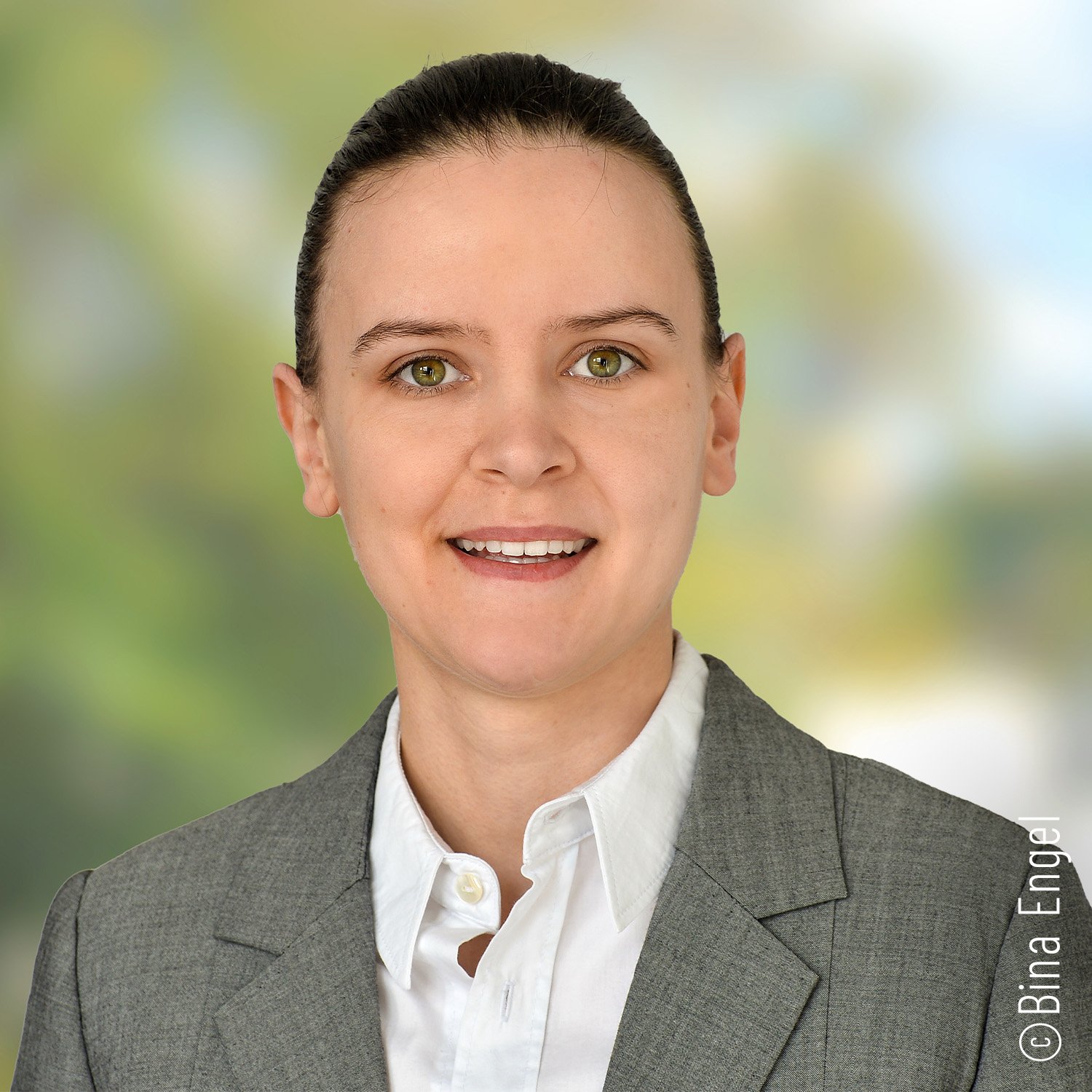
Ms Rüpke, what does your everyday work as advisor for shipping at the German Maritime Centre involve?
Like the entire team, I keep an eye on current topics in my field of work. In my position and due to my experience at sea, everything to do with ships is of particular interest for me. Specifically, my day-to-day work involves a wide variety of projects related to current topics. Right now, my focus is on digitalisation and AI. This also includes autonomous shipping – here, for example, I am gaining an overview of existing research projects and working out what we can initiate on the topic or which events we can participate in.
How will AI change shipping in the coming years?
Language models such as ChatGPT are already quite widespread in everyday life. I can imagine that such models will become indispensable on board – for translation, for writing reports, for looking up manuals and regulations, and much more. Navigation is also an area in which there is currently a great deal of research, with the aim of making ships themselves more intelligent. Certainly, many things are still in the testing phase, and it will be exciting to follow the progress in the years ahead.
You mentioned your “experience at sea”. What exactly do you mean by that?
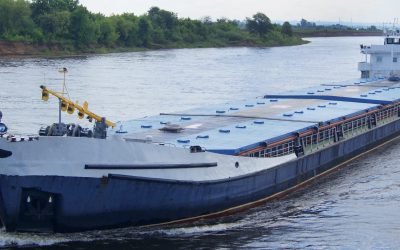
I spent almost five years at sea myself, first as an officer and most recently as a cargo ship captain in the North and Baltic Seas. That means I worked on small coasters, which, for example, carried bulk cargo.
Did you always want to become a captain?
Not always. I grew up in an inland area and had no contact with the maritime world as a child. As a teenager I first encountered maritime topics through sailing during the holidays. I was hooked, and over time I made contacts and got to know different areas. At some point my wish to pursue this direction professionally became more concrete.
After finishing school I applied to a shipping company for training as a nautical officer assistant (NOA), and there I soon noticed that this was the path I wanted to follow. I then studied Nautical Science in Elsfleth – and straight afterwards I went to sea myself.
I did my Master’s degree in “International Maritime Management” in parallel with my time at sea – it was a great way to spend my leave periods during the pandemic. During my Master’s I realised that I like to stay with individual topics for longer and delve into them more deeply than is usually possible in everyday life on board. That’s how I became aware of the German Maritime Centre and immediately thought it could be an exciting place for me.
Are you able to use your on-board experience for your current work?
Here at the German Maritime Centre I can explore topics in a completely different depth. We take a much broader view of issues, whereas in my everyday work on board I was more concerned with the application of content. Now I’m learning much more about the background to certain topics and I meet people who, for example, are behind regulations, such as in various committees.
I find this broad perspective on issues very exciting, and I enjoy engaging more intensively, for instance, with regulation for specific aspects or with very current questions around artificial intelligence.
Which areas are you working on at the moment?
As I already mentioned, AI is currently a key focus. In addition, I am heavily involved in our presence at various trade fairs. Next year we will be represented at Singapore Maritime Week and IdeenExpo and the planning effort for such events is considerable. But it is worth it, because at trade fairs you meet many interesting people and discover new topics. I particularly enjoy such events, and conferences as well.
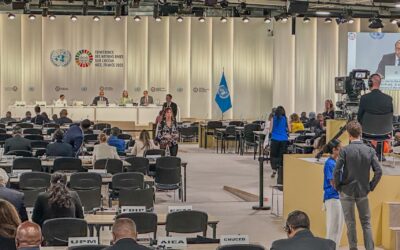
Earlier this year you’ve been to Singapore yourself for Singapore Maritime Week?
Yes, that’s right – in the spring we organised a German joint stand at SMW. It was the our first appearance at a trade fair outside Germany, which made the set-up and organisation particularly exciting – and we met a diverse international audience. It was great for exchanging ideas and getting new input.
Overall, trade fairs are always very different. At IdeenExpo, for example, we primarily deal with young people and have the opportunity to introduce them to maritime careers. This is another topic that I find very meaningful.
In what other ways do you work together with young people?
We are currently in the middle of planning for IdeenExpo 2026. Apart from that, I occasionally have the opportunity to talk young people about my experiences in seafaring at career orientation events. Both younger children and school pupils nearing graduation find maritime topics really exciting when you tell them about them – I think we can do valuable work here to raise awareness of maritime careers.
If you could wish for one change in your field, what would it be?
I think more awareness would not only benefit my area of work, but the maritime sector in general, in order to drive more innovation. Even here in Hamburg I am often the first seafarer people have met, or the first person they’ve met who works with related topics. People then always ask a lot of interesting questions, because many of them have no idea that seafarers are away for weeks or months at a time, that almost every object they have at home has been on a ship at some point, and what processes and people are behind this logistics chain. I feel that the entire sector deserves much more attention – but of course that is also one of the aims of our work.
How will AI change shipping in the coming years?
Language models such as ChatGPT are already quite widespread in everyday life. I can imagine that such models will become indispensable on board – for translation, for writing reports, for looking up manuals and regulations, and much more. Navigation is also an area in which there is currently a great deal of research, with the aim of making ships themselves more intelligent. Certainly, many things are still in the testing phase, and it will be exciting to follow the progress in the years ahead.
You mentioned your “experience at sea”. What exactly do you mean by that?
I spent almost five years at sea myself, first as an officer and most recently as a cargo ship captain in the North and Baltic Seas. That means I worked on small coasters, which, for example, carried bulk cargo.
Did you always want to become a captain?
Not always. I grew up in an inland area and had no contact with the maritime world as a child. As a teenager I first encountered maritime topics through sailing during the holidays. I was hooked, and over time I made contacts and got to know different areas. At some point my wish to pursue this direction professionally became more concrete.
After finishing school I applied to a shipping company for training as a nautical officer assistant (NOA), and there I soon noticed that this was the path I wanted to follow. I then studied Nautical Science in Elsfleth – and straight afterwards I went to sea myself.
I did my Master’s degree in “International Maritime Management” in parallel with my time at sea – it was a great way to spend my leave periods during the pandemic. During my Master’s I realised that I like to stay with individual topics for longer and delve into them more deeply than is usually possible in everyday life on board. That’s how I became aware of the German Maritime Centre and immediately thought it could be an exciting place for me.
Are you able to use your on-board experience for your current work?
Here at the German Maritime Centre I can explore topics in a completely different depth. We take a much broader view of issues, whereas in my everyday work on board I was more concerned with the application of content. Now I’m learning much more about the background to certain topics and I meet people who, for example, are behind regulations, such as in various committees.
I find this broad perspective on issues very exciting, and I enjoy engaging more intensively, for instance, with regulation for specific aspects or with very current questions around artificial intelligence.
Which areas are you working on at the moment?
As I already mentioned, AI is currently a key focus. In addition, I am heavily involved in our presence at various trade fairs. Next year we will be represented at Singapore Maritime Week and IdeenExpo and the planning effort for such events is considerable. But it is worth it, because at trade fairs you meet many interesting people and discover new topics. I particularly enjoy such events, and conferences as well.
Earlier this year you’ve been to Singapore yourself for Singapore Maritime Week?
Yes, that’s right – in the spring we organised a German joint stand at SMW. It was the our first appearance at a trade fair outside Germany, which made the set-up and organisation particularly exciting – and we met a diverse international audience. It was great for exchanging ideas and getting new input.
Overall, trade fairs are always very different. At IdeenExpo, for example, we primarily deal with young people and have the opportunity to introduce them to maritime careers. This is another topic that I find very meaningful.
In what other ways do you work together with young people?
We are currently in the middle of planning for IdeenExpo 2026. Apart from that, I occasionally have the opportunity to talk young people about my experiences in seafaring at career orientation events. Both younger children and school pupils nearing graduation find maritime topics really exciting when you tell them about them – I think we can do valuable work here to raise awareness of maritime careers.
If you could wish for one change in your field, what would it be?
I think more awareness would not only benefit my area of work, but the maritime sector in general, in order to drive more innovation. Even here in Hamburg I am often the first seafarer people have met, or the first person they’ve met who works with related topics. People then always ask a lot of interesting questions, because many of them have no idea that seafarers are away for weeks or months at a time, that almost every object they have at home has been on a ship at some point, and what processes and people are behind this logistics chain. I feel that the entire sector deserves much more attention – but of course that is also one of the aims of our work.